


Today, the tomato is the very soul of Italian and Sicilian cuisine, yet its story began far away. Native to the Americas, it arrived in Europe in the 16th century, brought by the Spanish. At first, it was not considered food: its bright, shiny fruit was admired more as an ornamental curiosity than as an ingredient. In Italy, it was called pomo d’oro – “golden apple” – but also “Spanish sauce”, since the Spanish introduced it to the South.
It was the Mezzogiorno, with its generous sun and volcanic or calcareous soils, that gave the tomato a true home. In Campania, the legendary San Marzano was born – the king of sauce tomatoes, with its firm flesh and delicate flavor. In Puglia, farmers developed long-keeping tomatoes (pomodori da pendola), harvested in bunches and hung in farmhouses to last through the winter. And then there is Sicily, which embraced the tomato as if it had always belonged here: from the sweet and aromatic Vittoria cherry tomato to the world-famous Pachino IGP, concentrated with flavor and Mediterranean character, alongside older rustic varieties still grown in the island’s heartlands.
The pendulum and the “siccagno” – treasures of tradition
In many rural corners of all South, families still cultivate the pomodoro a pendolo: clusters of small, red fruits tied together and hung in storerooms or under roofs, naturally preserved for months and ready to be rubbed on bread or simmered into a sauce even in midwinter. A simple, ingenious practice that reflects the resourcefulness of peasant communities, stretching the taste of summer into the colder season.
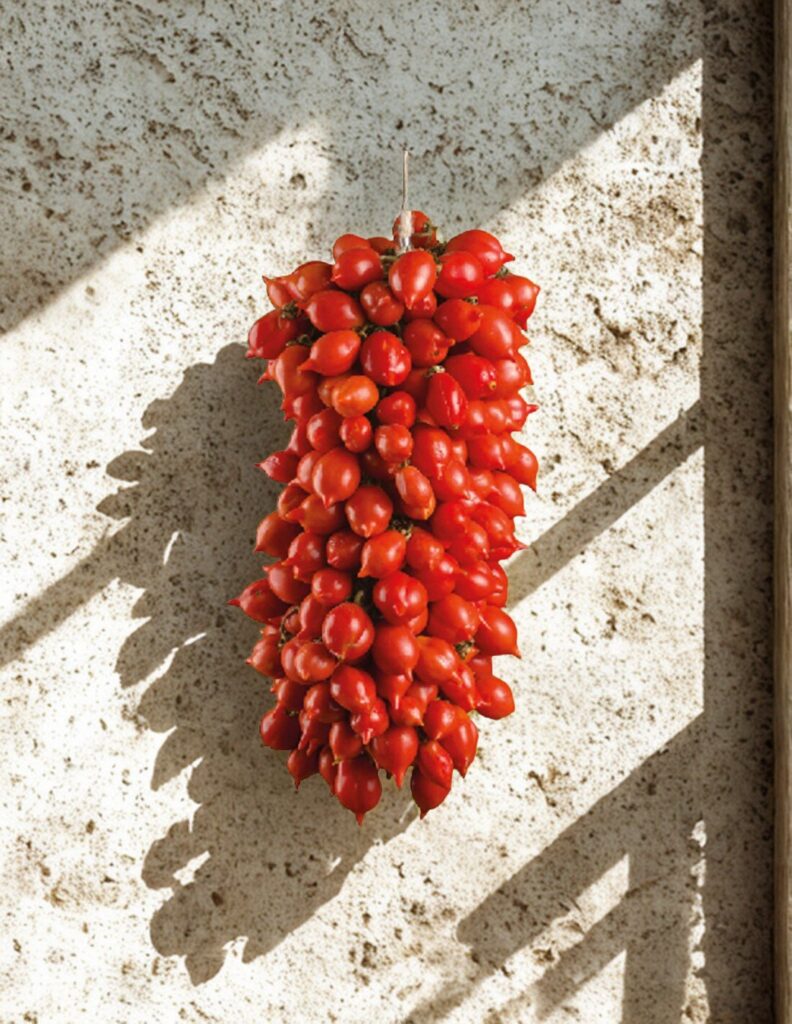
Even more unique is the siccagno tomato, typical of the island’s inland valleys, grown without irrigation, relying only on rainfall and nighttime humidity. This ancient technique yields small but incredibly intense fruits, with dense pulp and a rich, concentrated taste. From these tomatoes come some of the most flavorful Sicilian sauces and the traditional astrattu– a sun-dried tomato paste that condenses the island’s summer into a deep ruby-red block.
The tradition of “la passata”
For generations across Southern Italy, the end of summer meant one thing: the day of the passata. Families would gather to harvest the ripe tomatoes, wash them, simmer them slowly, then pass them through hand-mills before bottling and sealing them. Grandparents, parents, and children all worked together around steaming pots, with laughter, sticky red hands, and the intoxicating aroma of tomato filling the air. Those jars were more than food – they were memory itself, a way of storing the summer sun and keeping it alive through the winter months.
From field to table
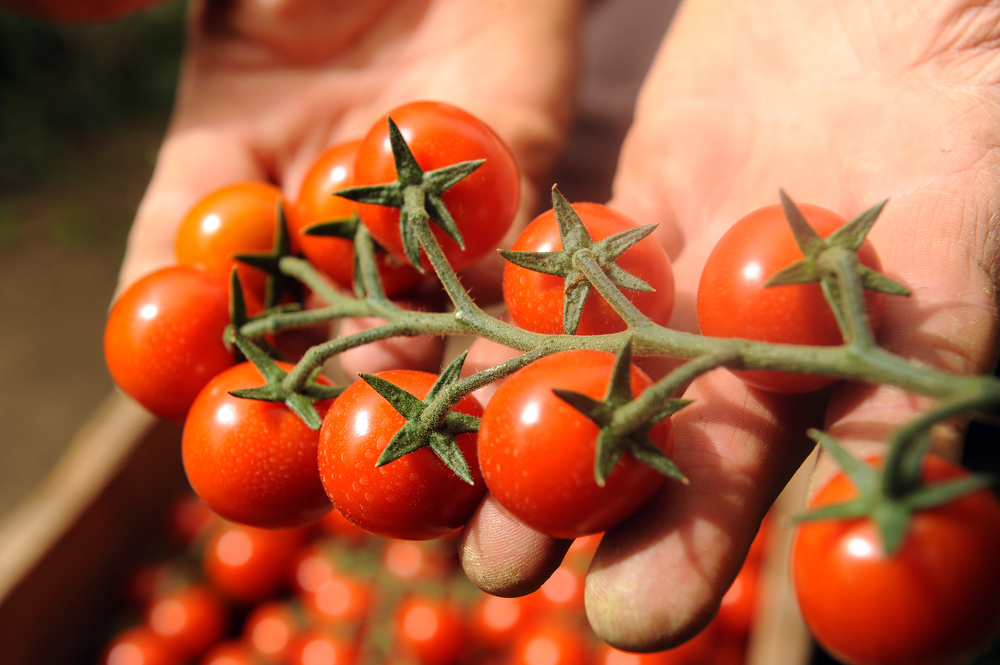
In Sicily, the tomato is more than an ingredient: it is a symbol of connection with the land. The astrattu, dark and dense from its days of sun-drying, is a perfect example – a spoonful can transform the simplest dish into an explosion of flavor.
Today, the tomato continues to embody Sicilian food culture. It is at the heart of farm-to-table experiences and our cooking classes in Sicily, where we often begin by touching, slicing, and tasting this fruit that has become the red thread of Mediterranean identity. Every variety – San Marzano, Pachino, pendolo, or siccagno – tells a different part of the love story between Southern Italy and its most iconic ingredient.
The journey of the tomato, from the New World to Mediterranean kitchens, is a story that never ends. It lives on each time a sauce gently simmers on the stove, and the fragrance of ripe tomatoes fills the room like an ancient embrace.
🍅 Historic and Iconic Tomato Varieties of Southern Italy
Sicily
- IGP
- Pomodoro di Pachino IGP (ciliegino, costoluto, tondo liscio, grappolo)
- PAT
- Pomodoro di Vittoria
- Pomodoro faino di Licata (Buttiglieddru)
- Pomodoro siccagnu/pizzutello di Paceco
- Pomodoro secco (ciappa/chiappa)
- Slow Food Presidia
- Pomodoro Siccagno della Valle del Bilìci
- Pomodoro Pizzutello delle Valli Ericine
- Pomodoro Buttiglieddru di Licata
Campania
- DOP
- Pomodoro San Marzano dell’Agro Sarnese-Nocerino DOP
- Pomodorino del Piennolo del Vesuvio DOP
- PAT
- Pomodoro di Sorrento
- Pomodoro fiaschello di Battipaglia
- Pomodoro guardiolo
- Pomodoro pelato di Napoli
- Pomodorino corbarino
- Pomodorino campano
- Slow Food Presidia
- Antichi Pomodori di Napoli
Puglia
- PAT
- Pomodoro da serbo giallo (Pummitoro te ’mpisa giallu)
- Pomodoro di Mola
- Pomodoro di Morciano
- Pomodoro Prunill
- Pomodoro Regina (Torre Canne)
- Salsa di pomodoro
- Slow Food Presidia
- Pomodoro Regina di Torre Canne
- Pomodoro Fiaschetto di Torre Guaceto
- Pomodoro Giallorosso di Crispiano
- Pomodorino di Manduria
Basilicata
- PAT
- Pomodorino rosso lungo di Castronuovo di Sant’Andrea
- Pomodoro di Maratea
- Pomodoro di Rotonda
- Pomodori sott’olio
- Slow Food Presidia
- Pomodoro Ciettaicàle di Tolve
Calabria
- PAT
- Pomodoro di Belmonte
- Pomodori secchi
- Pomodori secchi ripieni
- Pomodori secchi sott’olio
- Pomodori verdi conservati
- Slow Food Presidia
- Pomodoro di Belmonte (anche De.C.O. comunale)
Abruzzo
- PAT
- Pomodoro a pera d’Abruzzo (pear-shaped, very sweet, used for sauces)
- Pomodoro a fiaschetta (small flask-shaped tomato for preserves)
- Pomodoro a grappolo aquilano (cluster tomato, long shelf-life, hung in winter)
Sardinia
- PAT
- Pomodoro camone sardo (round, firm, sweet-savory balance, grown in saline soils – very popular for fresh salads)
- Pomodoro di Serramanna (local ecotype used both fresh and dried)
- Pomodoro secco sardo (traditional sun-dried tomato, preserved in oil)