
When we think of pesto, most of us immediately think of basil.
Basil, pine nuts, garlic, cheese and olive oil: pesto alla Genovese has become so famous around the world that pesto and basil are often treated as if they were the same thing.
But pesto begins before basil.
The word comes from the Italian verb pestare: to pound, to crush. Traditionally, ingredients were worked together with a mortar and pestle until they became a fragrant paste.
This is what makes pesto interesting to us.
It is not only a recipe. It is also a way of working with ingredients.
And sometimes the ingredient comes first.
A wild pesto begins with what grows here
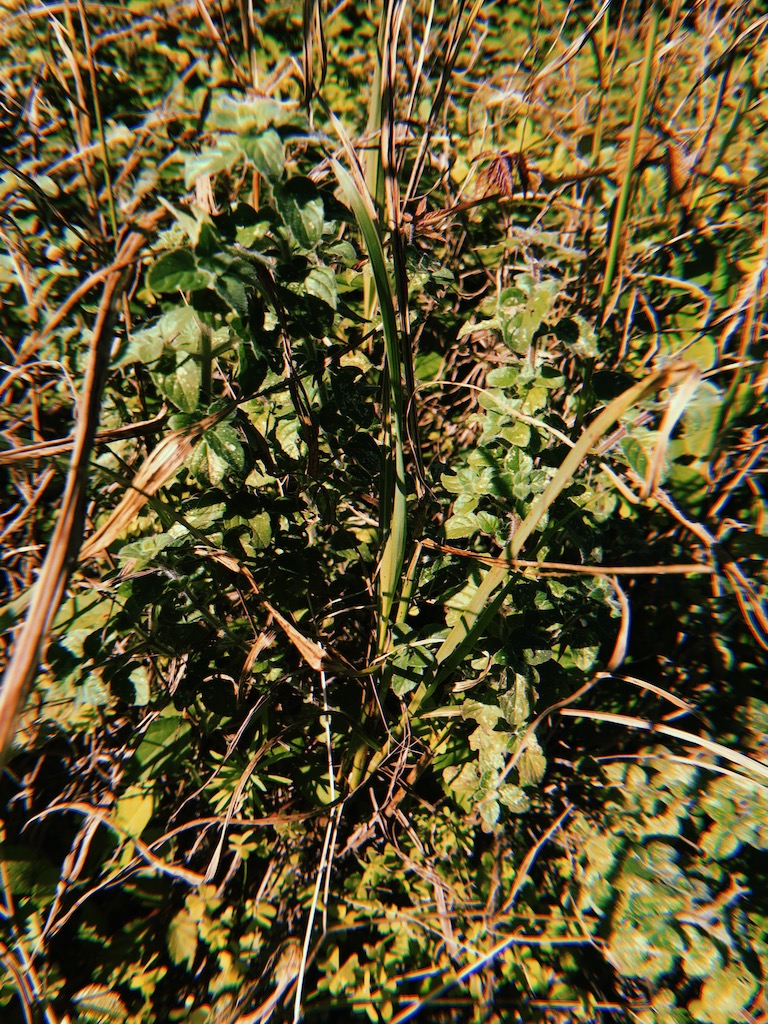
On our farm in southeastern Sicily, an aromatic herb grows spontaneously in the uncultivated parts of the land.
We do not plant it.
We do not need to decide where it should grow.
It simply appears when the season and the conditions are right.
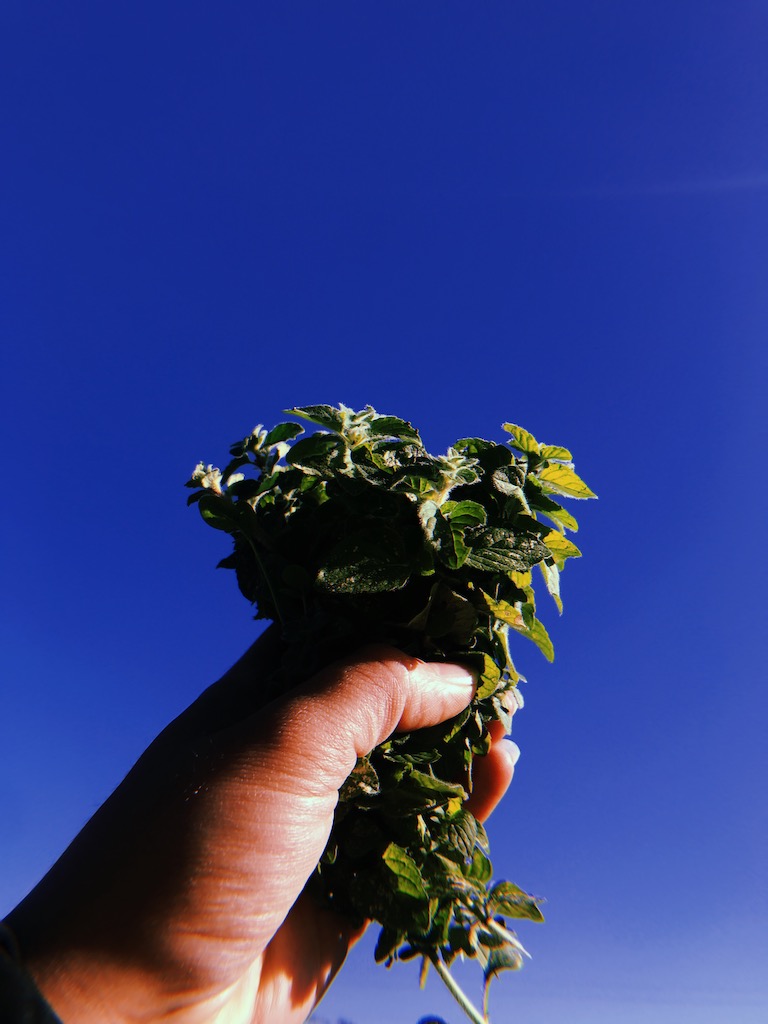
Its scent is intense and immediately recognizable. Walking through the farm, you can often smell it before paying attention to the plant itself.
We call it nepitella.
Its botanical name is Clinopodium nepeta, an aromatic perennial belonging to the mint family. Across Sicily and other parts of Italy, its common name can change from place to place, which is why you may also find different local names and spellings.
For us, however, the important thing is simpler: it is one of the wild herbs that belongs to this landscape.
And when it is in season, we gather its leaves and make pesto.
Pesto does not have to be basil
There is something we like about the idea of making pesto from a spontaneous herb.
It brings the word pesto back to its original action.
To crush.
To combine.
To taste.
To adjust.
Basil pesto may be the most internationally recognized version, but the technique itself invites us to pay attention to the ingredients available around us.
In our wild pesto, nepitella takes the place usually occupied by basil.
Its flavour is different. More pungent, more aromatic and distinctly Mediterranean.
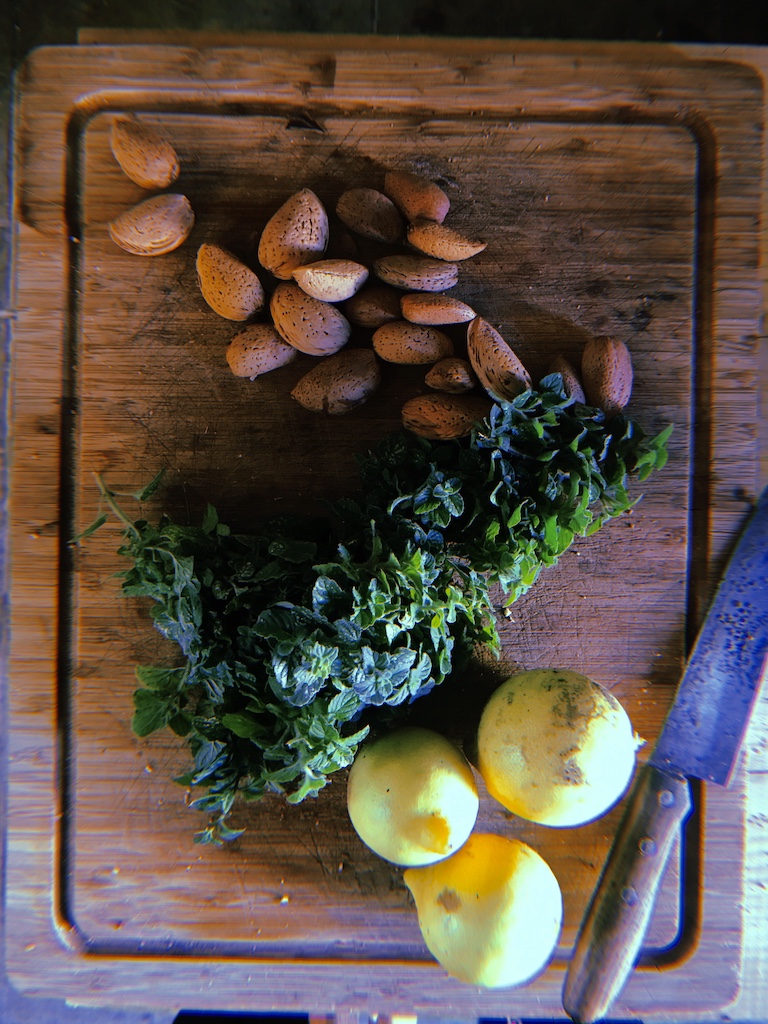
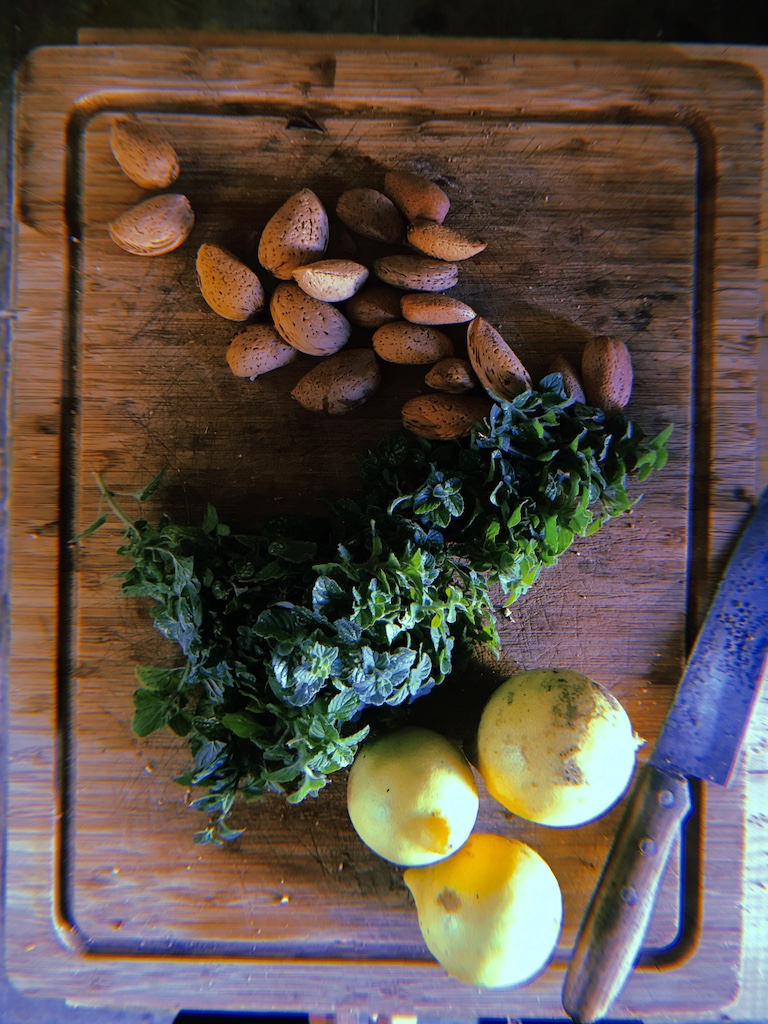
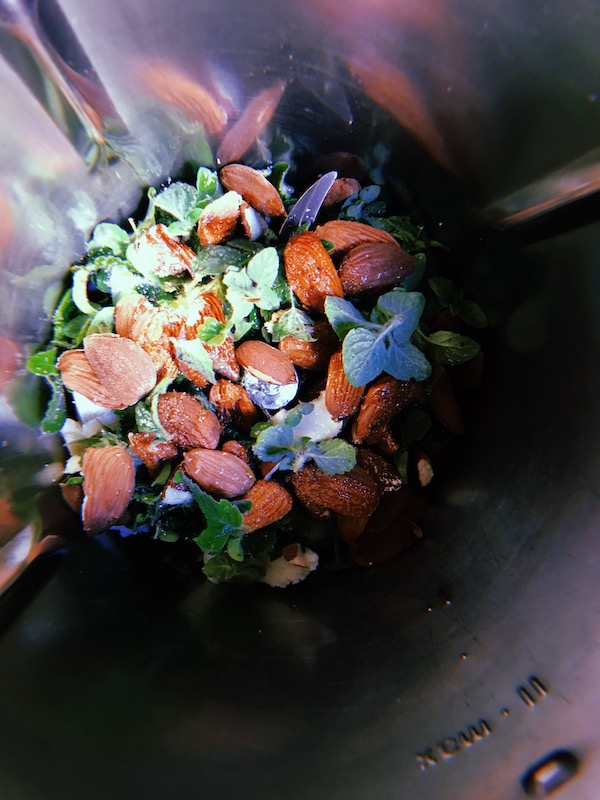
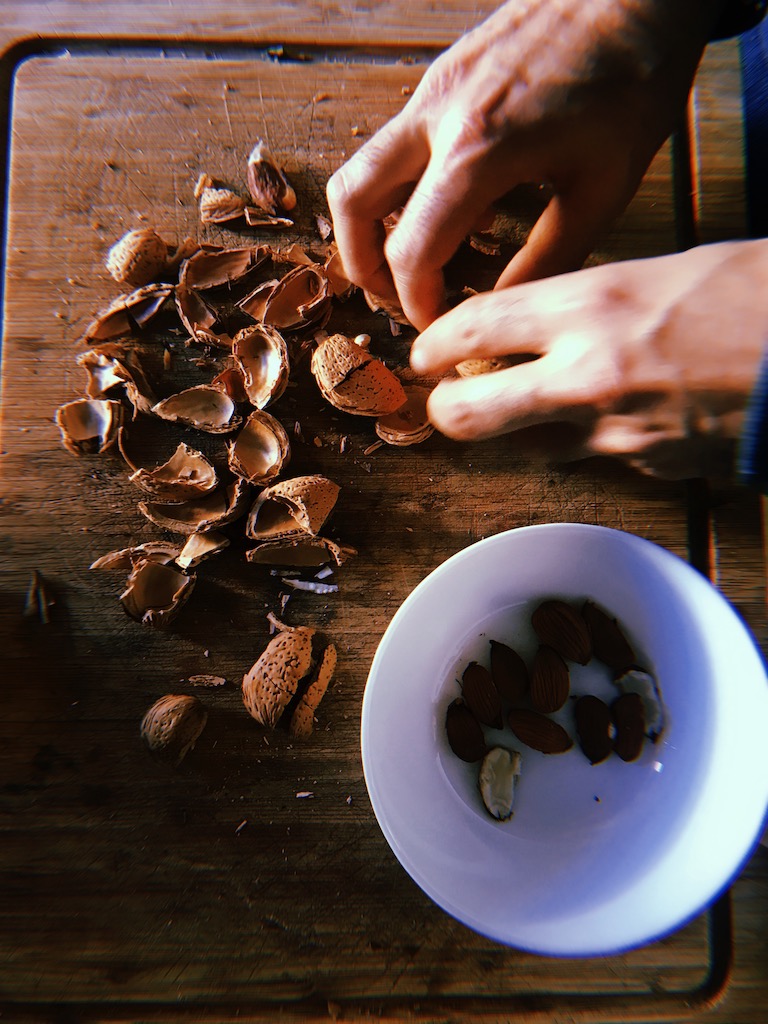
We combine it with almonds, Parmigiano, garlic and extra virgin olive oil.
The basic balance remains familiar, but the character of the pesto changes completely because the herb changes.
And that is exactly the point.
A recipe can remain recognizable while still belonging to a particular place.
What is nepitella?
Nepitella is a Mediterranean aromatic herb from the mint family.
Its fragrance can remind you of mint, but describing it simply as “mint” does not really explain it. Its aroma is more complex and more intense, especially when the plant grows wild.
In Sicilian rural cooking, wild and spontaneous herbs have always been part of the relationship between food and landscape.
You cook with what is available.
You learn when something appears.
You recognize its smell, its leaves and the moment when it is ready to be gathered.
Nepitella belongs to this kind of knowledge.
Traditionally, it has been used as an aromatic herb in different preparations. In Sicily, one of the combinations we know is with snails, cooked with garlic, olive oil, tomato and wild herbs.
But an ingredient does not have to remain inside one traditional recipe.
Once you understand its flavour, you can begin to use it in other ways.
For us, one of those ways is pesto.
From a wild herb to a farm pesto
Our pesto starts outside the kitchen.
That matters to us.
Before there is a recipe, there is a plant growing on the farm.
Before there are quantities, there is the smell of the leaves.
Before deciding what to prepare, we look at what the land is giving us at that moment.
This is very close to the way rural cooking has always worked.
Recipes were not invented independently from ingredients. They developed because particular ingredients were available in particular places and seasons.
Our nepitella pesto follows the same logic.
It is a simple preparation, but it tells the story of an ingredient that grows here without being cultivated.
Wild Nepitella Pesto Recipe
This pesto can be used with pasta, spread on toasted bread or served with vegetables.
As with every pesto, the quantities can also be adjusted according to the intensity of the herb and your own taste.
Ingredients
- 1 cup fresh nepitella leaves
- 1/2 cup almonds
- 1/2 cup grated aged Parmigiano cheese
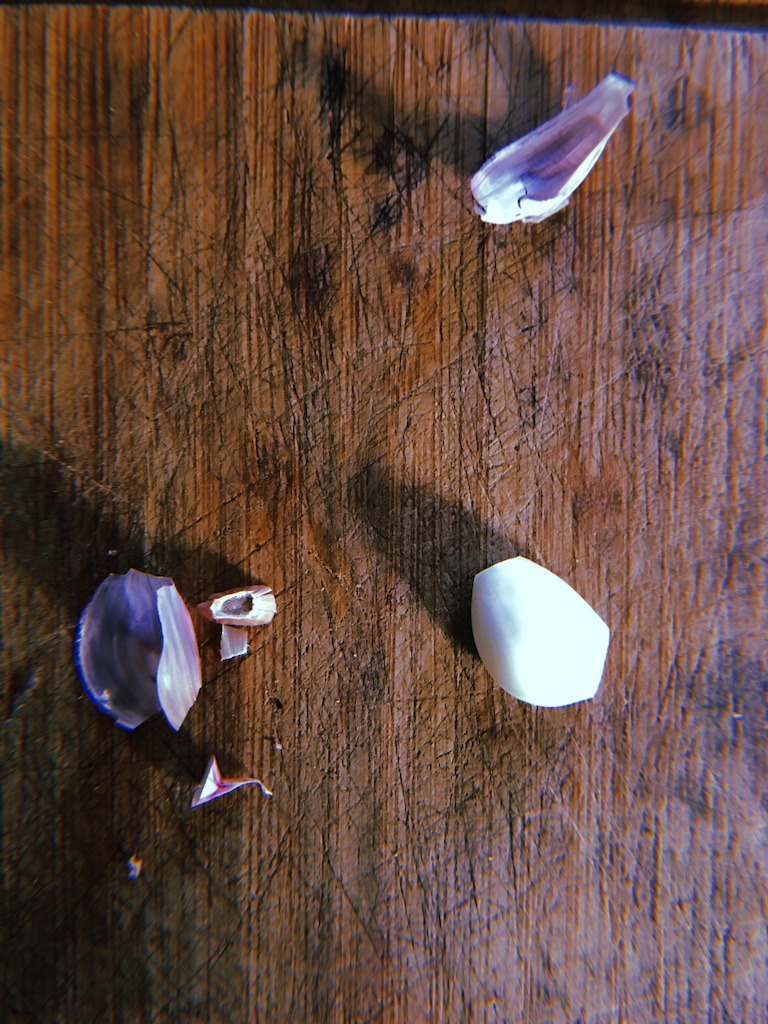
- 1 clove garlic
- A pinch of salt
- A pinch of red chilli flakes
- 1/2 cup extra virgin olive oil
How to make wild herb pesto
Place the nepitella leaves, almonds, Parmigiano, garlic, salt and chilli flakes in a food processor.
Pulse until the ingredients are finely broken down.
Start adding the extra virgin olive oil gradually, continuing to pulse until the ingredients come together into a pesto.
Do not worry about making it perfectly smooth. A little texture allows the individual ingredients to remain recognizable.
Taste and adjust the salt, cheese or olive oil if necessary.
The intensity of wild herbs is not always identical from one plant or one moment of the season to another, so tasting is part of the process.
Transfer the pesto to a clean container and keep it refrigerated.
What does wild pesto taste like?
This is not basil pesto with another leaf substituted into the recipe.
Nepitella has its own character.
It gives the pesto an aromatic, slightly pungent freshness, while the almonds soften its intensity. Parmigiano adds savouriness, garlic gives depth and extra virgin olive oil brings everything together.
It is familiar enough to be recognized as pesto, but different enough to make you stop and ask:
What herb is this?
That question is often the most interesting part.
Because the answer takes us away from the recipe and back to the landscape.
Can pesto be made with other herbs?
Yes.
If we understand pesto as a preparation based on crushing and combining ingredients rather than as a synonym for basil alone, many possibilities open up.
Different aromatic herbs can create completely different pestos.
The important thing is not simply to substitute ingredients mechanically. It is to understand their flavour and find the right balance between the aromatic ingredient, olive oil, nuts, cheese, garlic and seasoning.
A delicate herb will behave differently from a strong wild herb.
The recipe has to follow the ingredient.
Not the other way around.
Why we make wild pesto on our farm
During our farm-to-table food experiences, we like introducing guests to ingredients that are connected directly to the land around them.
Nepitella is a perfect example.
You can walk outside and see where it grows.
You can rub a leaf between your fingers and smell it.
And later the same aroma appears again on the table, transformed into something you can eat.
There is no great distance between the landscape and the recipe.
For us, this is one of the pleasures of cooking on a farm.
Food becomes easier to understand when you know where an ingredient comes from.
And sometimes the most memorable ingredient is not something we planted at all.
It was already here.
Growing wild.
Waiting to be gathered, crushed and turned into pesto.