
In this part of southeastern Sicily, almond trees have always been part of the landscape.
In the Val di Noto countryside they grow naturally in dry stone soils, shaped by light, wind, and long summers. In the past century alone, more than 700 varieties of almonds were recorded in this area — a sign of how deeply this ingredient is rooted in the land.
Here, almonds are not just used in recipes. They are part of a wider food culture that includes granita, pastries, and simple preparations that follow the rhythm of the seasons.
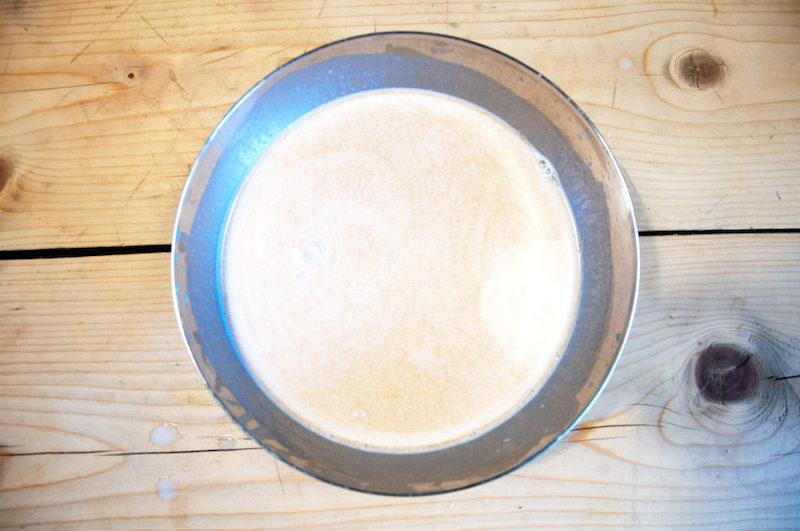
Almond milk belongs to this context.
It was never conceived as an alternative to something else, but as a natural expression of what was available — especially during the warmer months, when fresh animal milk was less central in everyday use.
Sometimes, this process is shared during our online cooking classes, where we prepare traditional recipes starting from ingredients and simple gestures.
Made with just almonds, water, and a simple extraction process, almond milk reflects a way of cooking that begins with ingredients, not recipes.
Below, you’ll find the traditional method, step by step.
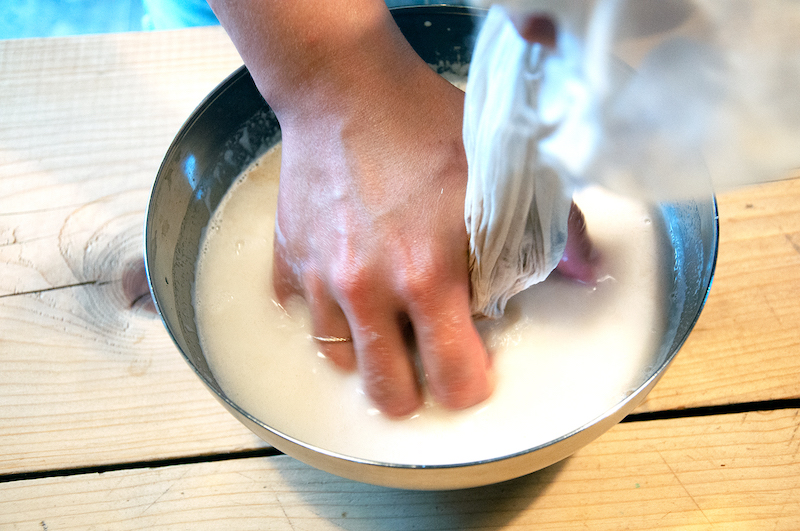
This is the moment when the milk is released.
Ingredients
- 150 grams almonds, raw
- 1 liter warm filtered water, 37C or 100F
- 3 Tbsp white sugar
- 1 large piece of cheesecloth
Step 1
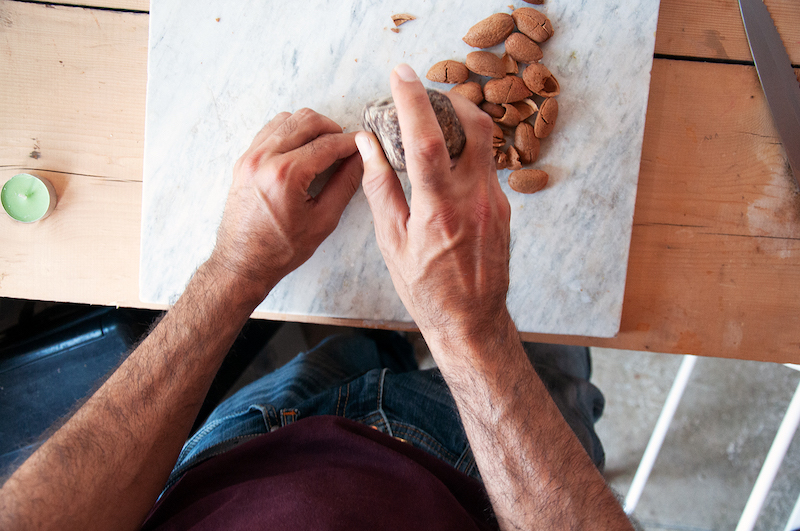
If you are using whole almonds in the shell:
Crack almonds open using a nutcracker or the traditional (old-school) fashion as you see in the below photograph. Reserve just enough almonds to achieve 150 grams. Then proceed to next grinding your almonds for about 7-10 seconds in a food processor until a fine grind is achieved. Note on grind amount: You still want small piece integrity without making an almond paste.
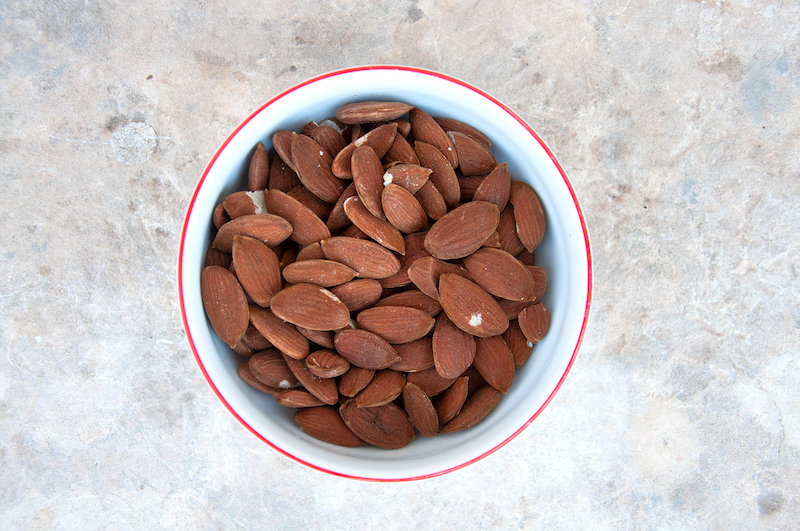
If you are using deshelled almonds:
Grind your almonds for about 7-10 seconds in a food processor until a fine grind is achieved. Note on grind amount: You still want small piece integrity without making an almond paste.
Step 2
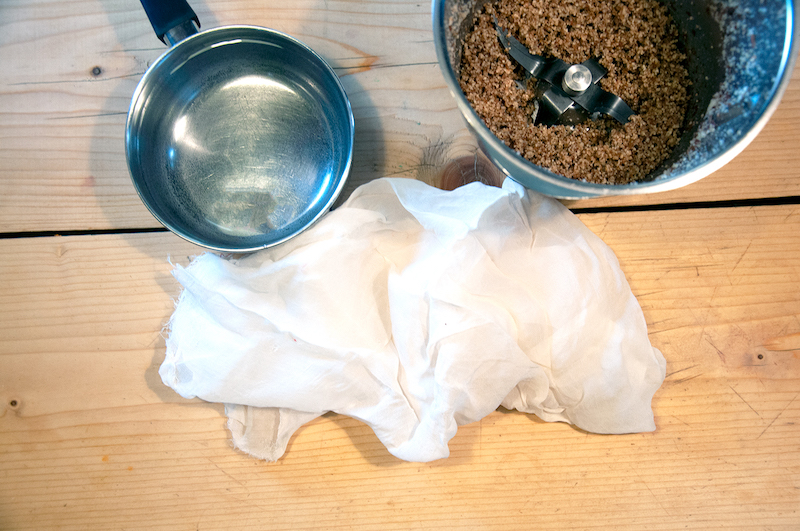
Quickly scold the water in a pan until the temperature is achieved, then place in a large bowl.
Step 3
Carefully scoop the almonds into the cheesecloth, using a cupping motion, twist off the top of the cloth to make sure the almonds pieces do not fall out into the water. With very clean hands, massage the almond enwrapped cheesecloth in warm water for about 5 minutes, then add in the sugar. Place in a mason jar then into the fridge. (Enjoy fresh and within about 3 days of making.)