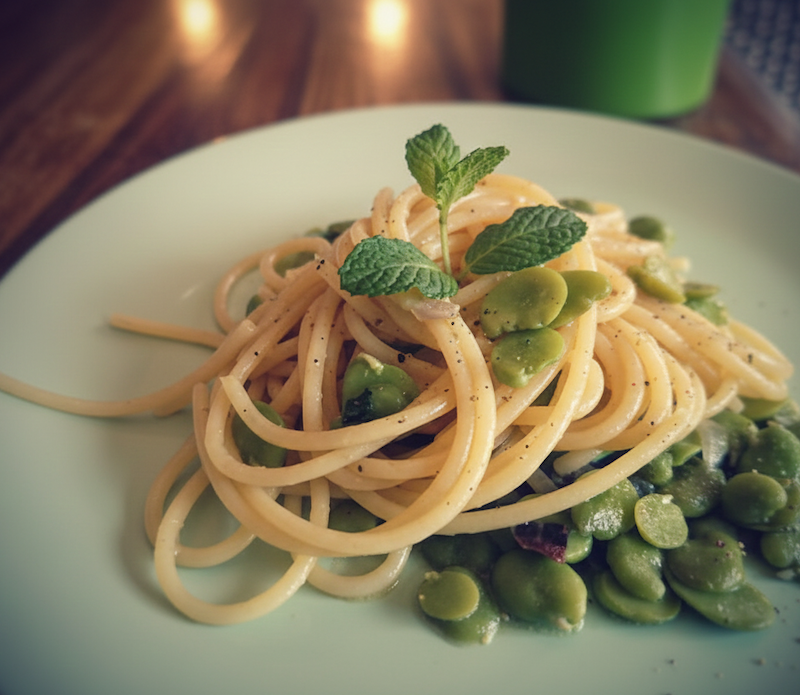

Spring in the Val di Noto countryside always begins with the same color — the soft green of fresh fava beans emerging from their pods.
At Three Farms Island, an organic farm near Noto in Eastern Sicily, fava beans are one of the first ingredients the land offers after winter. We grow them every year, both for the table and in their wild variety as green manure — sown through the cooler months to protect the soil, develop deep roots, and fix nitrogen naturally. Before feeding us, the land is fed first.
This spaghetti with fresh fava beans and mint draws from the spirit of macco di fave, one of the oldest and most essential dishes in Sicilian rural cooking — a slow-cooked puree of dried fava beans that has nourished the countryside for centuries. Here, the same tradition meets fresh spring beans and pasta, in a lighter and more immediate expression of the same ingredient.
The result is a dish that tastes entirely of the season. Simple, rooted, and best eaten when fava beans are at their very best — which in Sicily means March to May.
If you want to explore the cultural story behind this ingredient — its place in Sicilian food history, its connection to ancient philosophy, and its role in regenerative farming — you can read our Substack article on fava beans and the first green of spring.
You can also taste this dish in person during our Farm-to-Table Food Experience near Noto, when fava beans are in season.
Ingredients
14 oz dry spaghetti
300 grams shelled fava beans
1 red onion, diced
Extra virgin olive oil
Black pepper
Salt
1 handful of fresh mint
Directions
Remove the beans from the pod then, with a knife, remove the top.
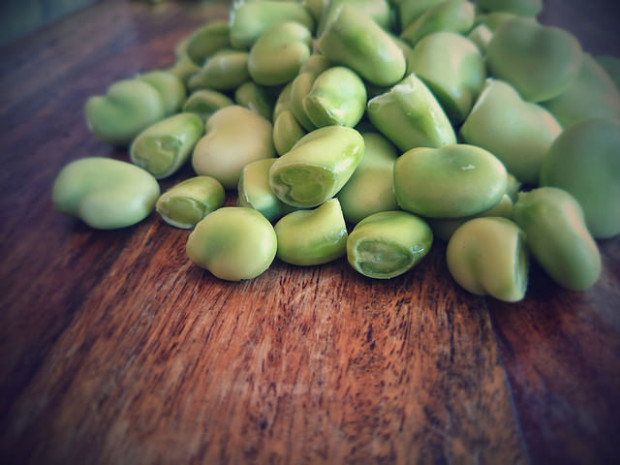
Blanch the beans in boiling water for 2 minutes, then drain and transfer them to a bowl with cold water.
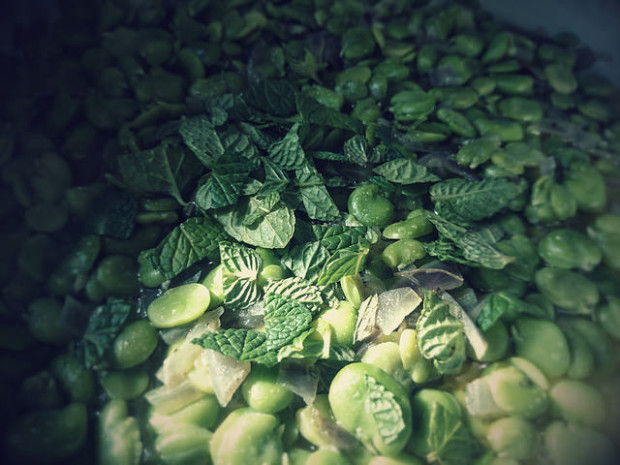
At this point you just need to remove the outer skin of the beans. Take a deep pan, pour in some olive oil and add the diced onion.
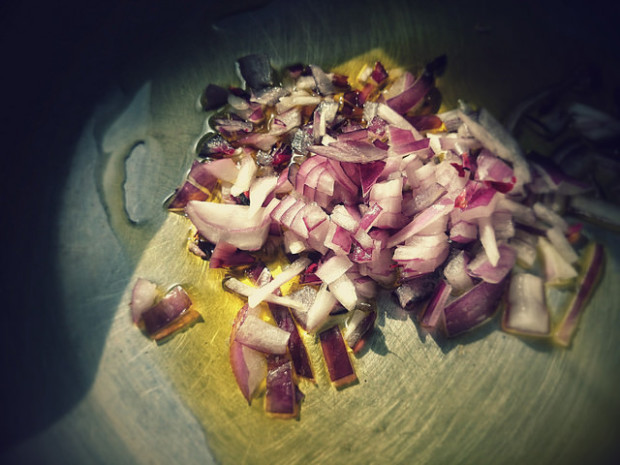
Fry the onion over low heat for about 5 minutes until they become translucent, then add the beans and salt.
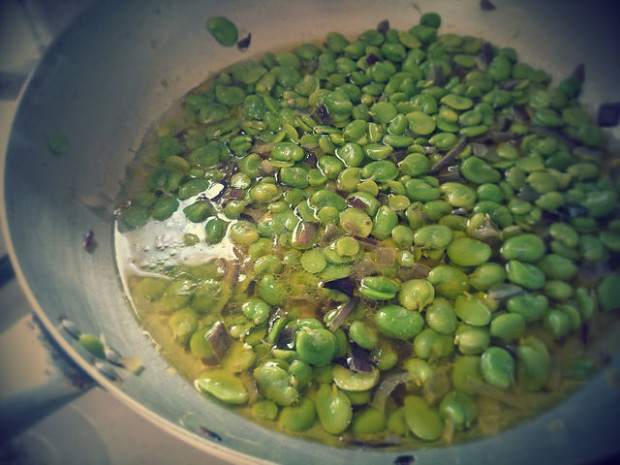
Add a ladle of hot water and let it cook for about ten minutes. When cooked, add the chopped mint leaves and freshly ground black pepper.
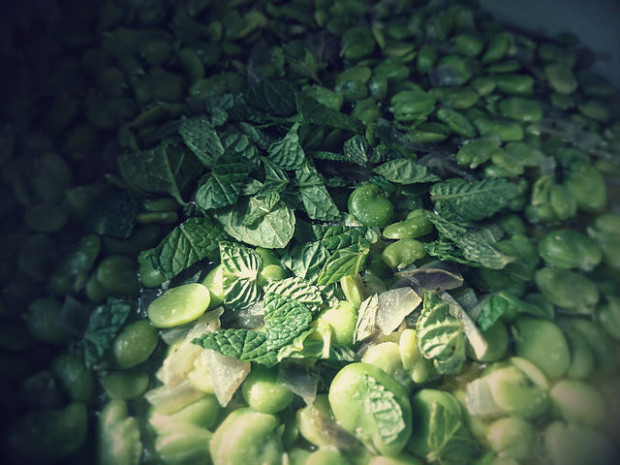
Cook the spaghetti until just shy of al dente by about 2 minutes, then transfer the pasta to the pan with the beans—reserving about 1 to 1-1/2 cups of starchy pasta water. Finish cooking the spaghetti by adding the pasta water little by little, until the pasta is perfectly cooked and tossed nicely with the beans, onions & mint. Serve immediately.
A Note on the Season
Fresh fava beans have a short window. In Sicily they arrive in March and are gone by May. Outside of that period, the flavor and texture change completely — this is a recipe that only makes sense in spring, made with beans that come directly from the pod.
If you are in the area during spring, this dish is part of the seasonal table at our farm. You can also find a simpler preparation — fava beans slowly stewed with olive oil, onion, and mint, served on bruschetta — in our stewed fava beans recipe.
FAQ
Do I need to remove the outer skin of the fava beans? If the beans are young and small, the skin is tender enough to leave on. If they are larger and more mature, removing the outer skin after blanching makes the final dish more delicate in both texture and flavor. The skin slips off easily once the beans have been briefly blanched in boiling water.
Can I use dried fava beans instead of fresh? No — this recipe is built around the sweetness and tenderness of fresh spring beans. Dried fava beans have a completely different texture and cooking time and would not work here. For a recipe using dried fava beans, the traditional preparation is macco di fave.
What pasta works best if I don’t have spaghetti? Any long pasta works well — linguine or bavette carry the bean sauce in the same way. Short pasta like rigatoni is also possible, though the character of the dish changes slightly.
Is this a traditional Sicilian recipe? It draws directly from the macco di fave tradition — one of the most ancient preparations in Sicilian cucina povera. This version uses fresh beans and pasta, reflecting how the same ingredient moves through different expressions depending on the season and what the land offers at that moment.
Can I visit the farm and taste this dish? Yes. During spring, fresh fava bean dishes are part of the seasonal menu at our Farm-to-Table Food Experience near Noto, in the Val di Noto, Eastern Sicily.