


Pesto alla trapanese is a raw Sicilian sauce of ripe tomatoes, almonds, basil, garlic and olive oil, from Trapani. Outside Italy it is often called Sicilian pesto.
It comes from Trapani, in western Sicily, and is traditionally served with busiate, the local hand-rolled pasta. Below you will find two versions: the recipe most people make today, with ripe raw tomatoes, and the older one, made entirely in a mortar and nicknamed “pasta with garlic”. The sauce is never cooked, which is why it only works in summer, when tomatoes are properly ripe. Its history is often linked to the contact between the ports of Genoa and Trapani, both important ports then and now, a story we tell separately on our Substack. Here we keep to the recipe.
The recipe with tomato (mortar or blender)
Serves 4. Prep about 25 minutes, plus cooking the pasta.
- 320 g short pasta, ideally busiate (fusilli or casarecce also work)
- 250 g very ripe tomatoes
- 70 g almonds
- 2 garlic clove, peeled
- A generous handful of fresh basil leaves (about 15 g)
- 60 ml extra virgin olive oil
- 25 g grated pecorino or good season Parmigiano
- Salt
- Red chilli flakes, optional
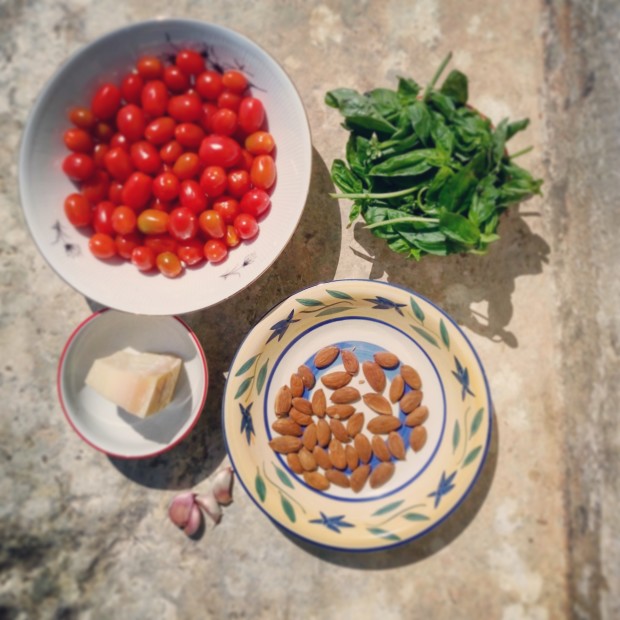
On the tomatoes. They decide the whole dish. Use tomatoes that are fully ripe, fragrant and sweet, the kind you find in Sicily from early summer through September. Pale, watery or out-of-season tomatoes give a flat, acidic sauce. If you cannot find good ones, make something else.
On the almonds. Almond trees grow all over Sicily, including on our farm. Peel them and toast them lightly for a rounder flavour.
On the garlic. One small clove is enough. Raw garlic is strong, so here it supports the sauce and does not lead it. If the clove has a green germ in the middle, remove it.
Peel the tomatoes
Score a small cross on the base of each tomato. Drop them into boiling water for about one minute, then move them to cold water. The skins slip off easily. If the tomatoes are very juicy, cut them in half and squeeze out some of the seeds so the sauce does not turn watery.
Method 1: the mortar
- Crush the garlic with a pinch of salt until it becomes a paste.
- Add the almonds and crush them to a coarse, uneven texture. A little crunch is right.
- Add the basil and work it in with a circular motion until it breaks down.
- Add the peeled tomatoes and crush them into the mixture, then stir in the pecorino.
- Pour in the olive oil gradually during all the process stirring until the sauce is loose and creamy but still textured.
Method 2: the blender
- Pulse the almonds and garlic first, until coarsely chopped.
- Add the basil, tomatoes and pecorino.
- Pulse in short bursts while adding the oil. Do not run the blender continuously: heat and speed turn the basil bitter and make the sauce smooth and uniform, losing the texture of the mortar version.
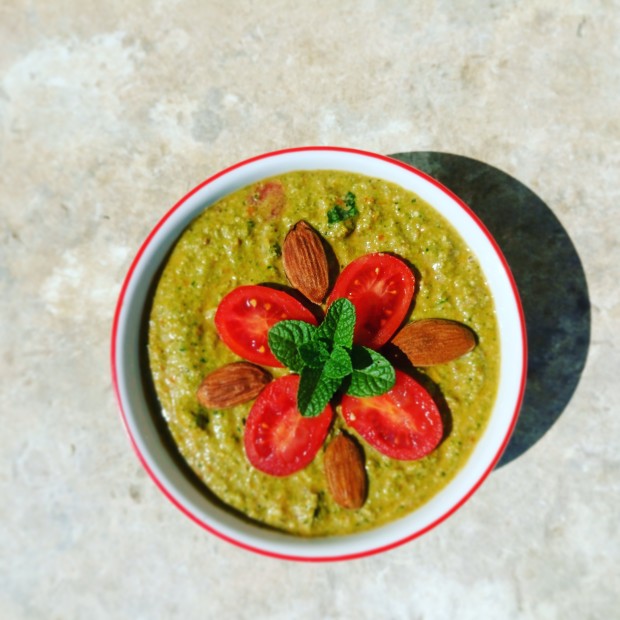
Finish the dish
Cook the pasta in well-salted water until al dente. Keep a small ladle of the cooking water. Drain the pasta, put it in a bowl and toss it with the pesto off the heat, adding a splash of cooking water if the sauce is too thick. Do not put the sauce in a pan: heat would cook the tomato and flatten the basil.
Variations
- With fried eggplant or fried potatoes on top. A common addition in Sicily: the warm, crisp topping against the raw sauce makes a good contrast. We explain how we fry in olive oil in this article.
- Creamier: a spoonful of fresh ricotta stirred into the sauce.
- Without cheese: omit the pecorino for a vegan version, and add a little extra salt and a few more almonds.
- With heat: a pinch of red chilli flakes.
The old recipe: “pasta with garlic”
Before blenders, pesto alla trapanese was made differently. It was nicknamed “pasta with garlic” (pasta con l’aglio) because the garlic led and the tomato came only at the very end. Everything is done in the mortar, and the sauce is left in the sun for about 20 minutes to thicken.
Serves 4.
- 320 g short pasta, ideally busiate
- 2 to 3 garlic cloves
- 15 g fresh basil
- 70 g almonds, peeled
- 30 to 40 ml extra virgin olive oil
- 25 g grated pecorino
- 250 g very ripe tomatoes, peeled
- Salt
- Crush the garlic with a pinch of salt in the mortar until it becomes a paste.
- Add the basil and work it into the garlic.
- Add the almonds and crush them, then the pecorino, pouring in the olive oil gradually, until you have a thick, glossy paste.
- Only now add the peeled ripe tomatoes, in the same mortar, and crush them into the paste.
- Spread the sauce on a wide plate and leave it in the sun for about 20 minutes, so it thickens and settles.
- Toss with the cooked pasta, off the heat.
Why short pasta. The sauce is dense, and it clings to short shapes. It does not suit spaghetti.

Questions people ask
Is pesto alla trapanese the same as Sicilian pesto?
In practice, yes. “Pesto alla trapanese” is the name used in Italy, and “Sicilian pesto” is what it is often called abroad. The recipe comes from Trapani, in western Sicily.
What is the old version of pesto alla trapanese?
A mortar-only sauce nicknamed “pasta with garlic”: garlic, basil, almonds and olive oil, with ripe tomato added at the end and the sauce left in the sun for about 20 minutes to thicken.
What pasta goes best with it?
Short shapes. Busiate, the twisted hand-rolled pasta from the Trapani area, are the traditional choice; fusilli and casarecce also work. Spaghetti is not recommended.
Mortar or blender?
The mortar gives a coarser, more textured sauce. The blender is faster and works well if you pulse in short bursts. Either way, ripe tomatoes matter more than the tool.
Can I make it in winter?
Not well. The sauce depends on ripe, in-season tomatoes, so it is a summer dish.
Can I keep it?
It is a dish to make fresh. At most it keeps for half a day, covered and refrigerated, but the basil loses its freshness.
Cook it with us
If you want to make this kind of dish by hand, in a working farm kitchen in eastern Sicily, see our hands-on farm cooking class.